
Filter content
Neuroscience and flamenco: how arte jondo impacts the brain
Discover how flamenco activates emotion, memory and creativity from a neuroscientific perspective
Flamenco does more than move us emotionally, it also transforms our brains. Neuroscience has begun to explore how flamenco music, flamenco singing, flamenco dancing and playing flamenco guitar activate brain processes that enhance memory, coordination and emotional wellbeing.
Flamenco as a multisensory stimulus
When we go to a flamenco show in Madrid, we do far more than simply listen to music:
- Our hearing captures the nuances of the flamenco singing and the flamenco guitar.
- Our sight follows the flamenco dancer’s movements and expressive gestures.
- Our bodies respond to the flamenco rhythm, often without us even realising it.
This combination of stimuli activates different areas of the brain simultaneously, encouraging neuroplasticity, the brain’s ability to adapt and learn.
The effect of flamenco on emotions and the limbic system
Flamenco, especially in palos such as the seguiriya or the soleá, awakens deep emotions. Neuroscience explains that these reactions originate in the limbic system, the part of the brain that regulates feelings such as sadness, joy and nostalgia.
Flamenco singing, rich in melismas and shifts in intensity, can trigger emotional responses similar to those we experience during moments of profound personal impact.
Flamenco rhythm, coordination and the motor cortex
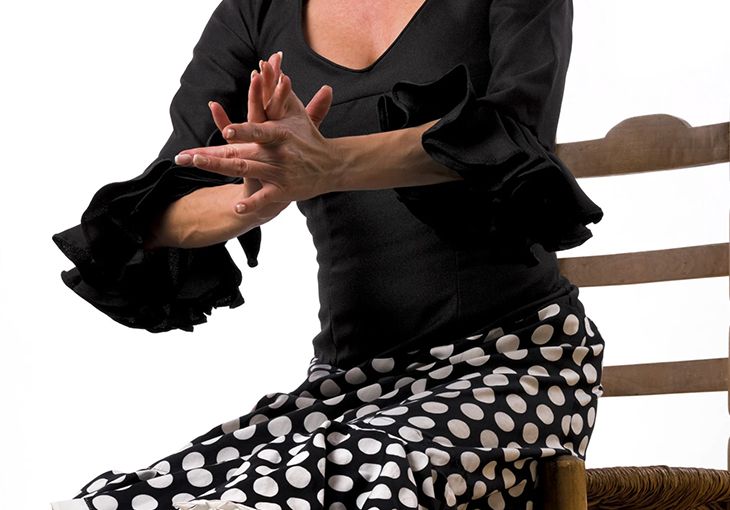
Zapateado and handclapping, which require rhythmic precision, activate the motor cortex and improve coordination. For a dancer, following the compás while moving the body and expressing emotion represents both high-level cognitive and physical training.
Even as spectators, mentally following the rhythm strengthens neural connections related to timing and musical memory.
The role of flamenco on memory and learning
Practising flamenco, whether through singing, dancing or playing the guitar, involves remembering complex sequences and adapting them to different contexts. This exercises working memory, which is essential for other areas of learning such as languages or mathematics.
Flamenco for increased wellbeing and less stress
Dancing to, or listening to, flamenco can lower levels of cortisol, the stress hormone, thanks to the release of endorphins and dopamine. In addition, the social element of rehearsals and performances enhances feelings of belonging and human connection.
Flamenco is more than an art form: it is a complete cerebral experience that engages the mind, the body and the emotions.
If you would like to experience first-hand how flamenco transforms not only what you feel but also how your brain functions, Inspiración at Teatro Flamenco Barcelona, the most popular daily, live flamenco show in Barcelona, awaits you for a unique experience of compás, emotion and science in action. Get your flamenco tickets here.