Filtrar contenido
Los palos del flamenco: cómo diferenciarlos (guía para principiantes)
Una introducción clara y accesible a los estilos fundamentales del flamenco, pensada para quienes quieren entender mejor lo que ven en escena.
Quienes se acercan por primera vez al flamenco suelen sorprenderse al descubrir que no existe “un solo flamenco”, sino muchos. Cada estilo, conocido como palo, tiene su propia estructura, compás y carácter. En Teatro Flamenco Barcelona, creemos que entender estos matices ayuda a disfrutar aún más de cada función.
¿Qué es un “palo” en el flamenco?
En el contexto flamenco, palo no significa otra cosa que un estilo musical concreto. Existen más de 50 palos reconocidos, aunque en la práctica escénica los más habituales son una docena. Cada uno tiene sus propias reglas rítmicas (compás), temas habituales en sus letras y una forma de interpretación que lo distingue. Algunos son más solemnes, otros más festivos, algunos se bailan, otros se cantan sin baile. Esta variedad es una de las mayores riquezas del flamenco.
Palos básicos y cómo identificarlos
A continuación, repasamos algunos de los palos más representativos que puedes ver en espectáculos como los que ofrecemos en Teatro Flamenco Barcelona:
Soleá
Es uno de los palos más antiguos y respetados. Su compás es de 12 tiempos, y su carácter es profundo e introspectivo. La soleá se canta y se baila con recogimiento, y a menudo se la reconoce por su ritmo pausado.
Alegrías
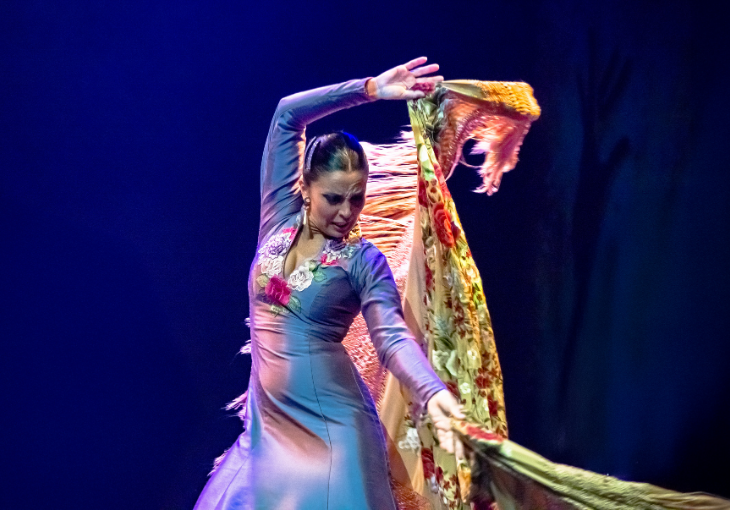
A diferencia de la soleá, las alegrías son luminosas y vivas. Comparten el compás de 12 tiempos, pero a un ritmo más ágil y con un aire más festivo. Son típicas de Cádiz y suelen acompañarse con castañuelas y mantón.
Bulerías
De ritmo rápido y mucha improvisación, las bulerías son uno de los palos más complejos de ejecutar, tanto para el cante como para el baile. Su compás también es de 12 tiempos, pero con una acentuación distinta que las hace inconfundibles.
Tangos flamencos
No hay que confundirlos con el tango argentino. Los tangos flamencos tienen un compás de 4 tiempos, son muy rítmicos y suelen tener un tono más popular. Son ideales para el baile por su energía constante.
Fandangos
Existen muchas variantes de fandangos, y su estructura suele ser más libre en cuanto al ritmo. A menudo comienzan con una parte cantada a palo seco (sin guitarra) y luego entra el acompañamiento.
Consejos para identificar palos como espectador
Aunque no es necesario ser un experto para disfrutar del flamenco, reconocer los palos puede enriquecer la experiencia. Aquí algunas sugerencias:
- Escucha el compás: Contar los tiempos (especialmente en palos de 12 como la soleá o la bulería) ayuda a diferenciarlos.
- Observa el carácter del baile: Si el baile es solemne y contenido, puede tratarse de una soleá; si es dinámico y lleno de cambios, probablemente es una bulería.
- Atiende al cante: El contenido de la letra y su tono emocional también dan pistas: tristeza, júbilo, introspección…
En nuestros espectáculos, muchas veces se presentan varios palos en una misma función. Ver cómo se suceden y contrastan entre sí es parte de la magia.
Conocer los palos del flamenco es abrir una puerta a una experiencia más rica y consciente. Desde Teatro Flamenco Barcelona, te invitamos a descubrirlo en primera persona. Porque no hay mejor forma de aprender sobre flamenco que verlo, escucharlo y vivirlo en directo.
Compra tus entradas y déjate llevar por la fuerza de este arte en pleno corazón de Barcelona.
Lo más leído
Opiniones sobre Teatro Flamenco Barcelona: qué dicen quienes han vivido la experiencia
Las reseñas de Teatro Flamenco Barcelona destacan la emoción de nuestro espectáculo flamenco, el talento de nuestros artistas y la cercanía con la que el público puede disfrutar del baile, el cante y la guitarra