
Filtrar contenido
Neurociencia y flamenco: cómo el arte jondo impacta en el cerebro
Descubre cómo el flamenco activa las emociones, la memoria y la creatividad desde la perspectiva de la neurociencia
El flamenco no solo emociona: también transforma nuestro cerebro. La neurociencia ha comenzado a estudiar cómo la música, el cante, el baile y el toque flamenco activan procesos cerebrales que mejoran la memoria, la coordinación y el bienestar emocional.
El flamenco como estímulo multisensorial
Cuando presenciamos un espectáculo flamenco, no solo escuchamos música
- El oído capta los matices del cante y la guitarra.
- La vista sigue los movimientos del baile y los gestos del artista.
- El cuerpo responde al compás, incluso sin darnos cuenta.
Esta combinación de estímulos activa diferentes áreas cerebrales al mismo tiempo, favoreciendo la plasticidad neuronal, es decir, la capacidad del cerebro para adaptarse y aprender.
Emociones y sistema límbico
El flamenco, especialmente en palos como la seguiriya o la soleá, despierta emociones profundas.
La neurociencia explica que estas reacciones se originan en el sistema límbico, la parte del cerebro que regula sentimientos como la tristeza, la alegría o la nostalgia. El cante flamenco, cargado de melismas y cambios de intensidad, puede generar respuestas emocionales similares a las que experimentamos en momentos de gran impacto personal.
Ritmo, coordinación y corteza motora
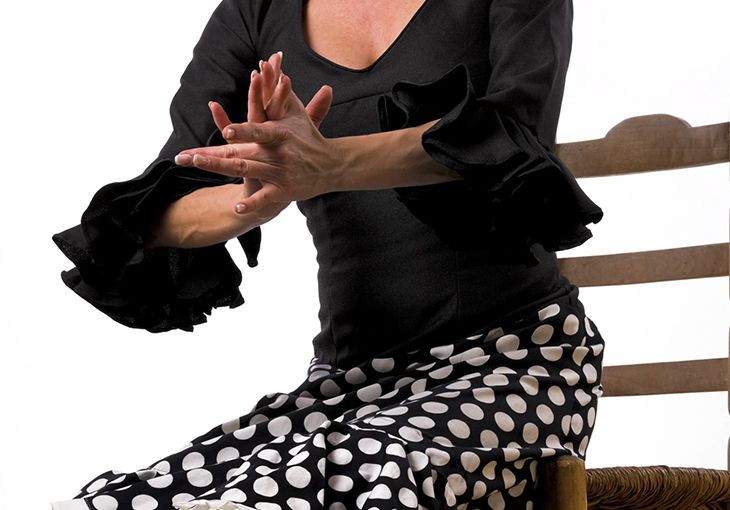
El zapateado y las palmas, al requerir precisión rítmica, activan la corteza motora y mejoran la coordinación. Para un bailaor o bailaora, seguir el compás mientras se mueve el cuerpo y se interpreta emocionalmente supone un entrenamiento cognitivo y físico de alto nivel.
Incluso como espectadores, seguir el ritmo mentalmente fortalece conexiones neuronales relacionadas con el tiempo y la memoria musical.
Memoria y aprendizaje
La práctica del flamenco, ya sea en el cante, el baile o el toque, implica recordar secuencias complejas y adaptarlas a diferentes contextos. Esto ejercita la memoria de trabajo, clave para otras áreas de aprendizaje como idiomas o matemáticas.
Bienestar y reducción del estrés
Bailar o escuchar flamenco puede reducir los niveles de cortisol, la hormona del estrés, gracias a la liberación de endorfinas y dopamina. Además, el componente social de los ensayos y actuaciones potencia el sentimiento de pertenencia y conexión humana.
El flamenco es más que arte: es una experiencia cerebral completa que activa la mente, el cuerpo y las emociones.
Si quieres vivir en primera persona cómo el flamenco transforma no solo lo que sientes, sino también cómo funciona tu cerebro, Teatro Flamenco Barcelona te espera para una experiencia única de compás, emoción y ciencia en acción.
Lo más leído
Opiniones sobre Teatro Flamenco Barcelona: qué dicen quienes han vivido la experiencia
Las reseñas de Teatro Flamenco Barcelona destacan la emoción de nuestro espectáculo flamenco, el talento de nuestros artistas y la cercanía con la que el público puede disfrutar del baile, el cante y la guitarra